Pet Growth Blueprint: 12 Vital Rules for Rapid, Safe Maturation
Table of Contents
The Biological Core of Pet Growth Optimization
Tracking the precise arc of pet growth requires more than watching an animal get larger; it demands an intimate understanding of cellular differentiation, skeletal ossification, and metabolic scaling. Every domestic dog and cat possesses an intricate, genetically predetermined developmental trajectory. When a young companion enters your home, their biological systems are functioning at an astronomical metabolic rate, socialising tissues, expanding bone lengths, and establishing neurological pathways at velocities never replicated in adulthood. Managing this phase successfully forms the fundamental bedrock of lifelong pet health, preventing structural issues before they manifest.
Unchecked acceleration in pet growth velocity represents a significant physiological risk. If a canine or feline skeleton expands too quickly due to caloric excess or improper mineral saturation, the structural integrity of the bone matrix degrades. This systemic mismatch creates high susceptibility to debilitating conditions like hip dysplasia, osteochondrosis dissecans, and joint laxity. By taking control of these biometric patterns early, you can directly influence gene expression, ensure smooth epiphyseal plate closure, and set your pet up for an active, pain-free life.
Decoding the Four Critical Pet Growth Horizons
1. The Neonatal Transition (Weeks 1 to 4)
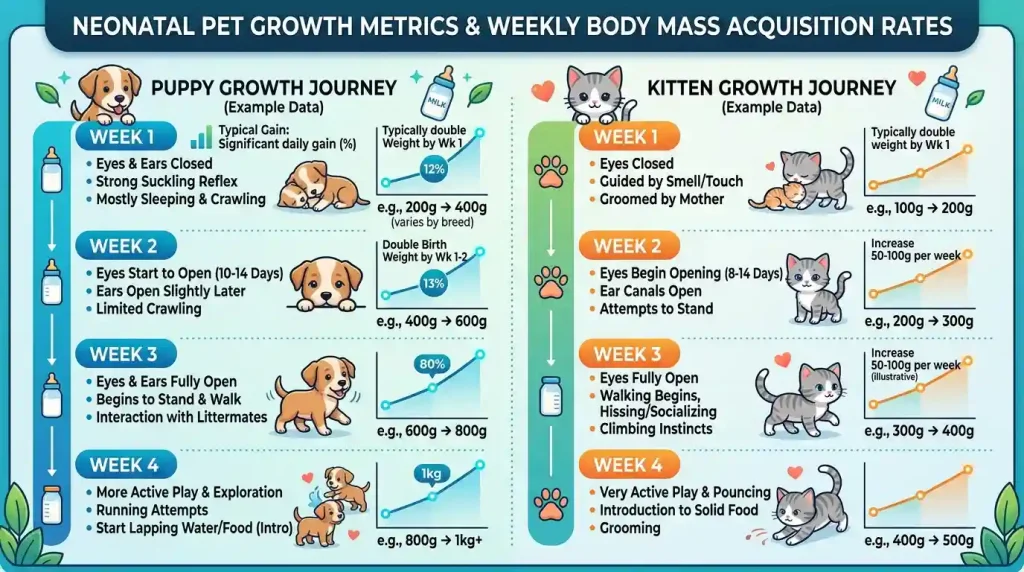
During the opening weeks of life, canine and feline development depends entirely on thermal regulation, maternal antibody absorption, and localised moisture control. At birth, a newborn’s neurological system is incomplete; their eyes and ear canals remain tightly sealed, and their internal core relies on environmental heat sources or maternal contact to maintain stable survival temperatures. Growth at this stage happens at an incredible pace, driven by highly efficient metabolic pathways.
Nutritional success during this early period hinges on the intake of high-quality colostrum within the first twenty-four to forty-eight hours. This rich fluid coats the highly permeable intestinal lining, transferring vital maternal immunoglobulins directly into the bloodstream to establish systemic defence networks. Weight gain should be linear and continuous. Any stagnation or loss in body mass during these initial weeks indicates an immediate metabolic issue or a failure to thrive, requiring rapid intervention.
2. The Weaning and Socialization Transition (Weeks 5 to 8)
As young animals approach their fifth week, the maternal milk supply can no longer satisfy their expanding caloric and mineral demands. This period marks the start of weaning, a complex physiological transition where the digestive tract shifts from processing simple liquid lactose to digesting complex solid proteins, fats, and structural carbohydrates. Concurrently, the natural immunity provided by maternal colostrum begins to fade, leaving a temporary vulnerability in the animal’s internal defences.
Introducing solid food requires a careful, gradual approach to protect the sensitive gut microbiome. Sudden dietary changes can cause acute dysbiosis, leading to systemic inflammation, severe osmotic diarrhoea, and dehydration that stalls overall progress. To transition safely, offer a moisture-rich gruel that combines warm water or specialised replacement formulas with finely ground premium growth kibble. This protects the delicate intestinal villi while gently encouraging natural chewing and swallowing behaviours.
3. The Juvenile Acceleration Phase (Months 3 to 6)
The juvenile window brings an intense period of skeletal elongation and rapid structural development. This phase requires precise nutritional management, as the long bones of the limbs are expanding from their cartilaginous templates at peak velocity. Because the young skeleton is highly dynamic, it is incredibly sensitive to external factors like physical impact, improper exercise routines, and imbalances in trace minerals.
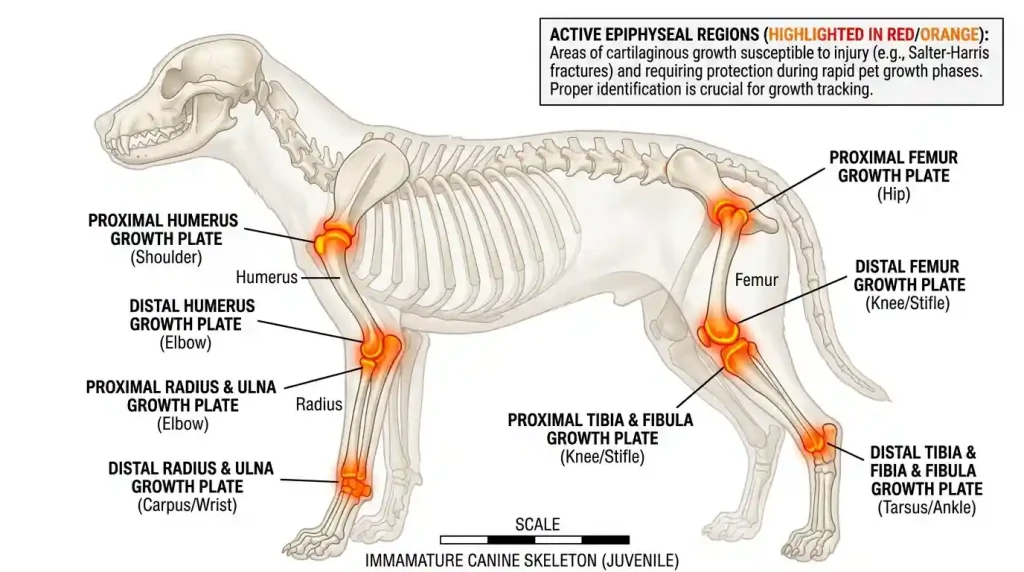
During this period of rapid expansion, the soft, cartilaginous epiphyseal plates sit at the ends of long bones, serving as the centres for new bone formation. These areas remain highly vulnerable to shearing forces and structural damage. Pet Growth: Allowing young, heavy-set animals to jump from high surfaces or engage in repetitive, high-impact activities can easily fracture or misalign these delicate zones, causing permanent limb deformities. Exercise should focus on natural, self-regulated play on forgiving surfaces like grass or carpet to support healthy muscle distribution without overloading the developing joints.
4. Maturation and Consolidation (Months 7 to 18)
The final stage of development shifts its focus from rapid skeletal lengthening to increasing bone density, building muscle mass, and establishing adult metabolic baselines. While small-breed dogs and standard domestic cats often reach their full physical dimensions by nine to twelve months, large and giant canine breeds continue consolidating their skeletal structures well past eighteen months of life.
During this concluding phase, hormonal changes trigger the final ossification and closure of the epiphyseal plates. Once these growth zones fuse into solid bone, the animal’s structural frame is locked in place. From this point forward, any additional weight gain will build soft tissue or adipose fat rather than expanding the skeletal frame. Your management goal must pivot from fuelling rapid development to maintaining a lean, balanced body composition that protects long-term joint health.
Structural Biometrics: Tracking Skeletal and Muscle Density
Understanding the Epiphyseal Growth Plate
The long bones—such as the femur, radius, and humerus—grow from specialised cartilaginous zones called epiphyseal plates. Under the influence of growth hormone (GH) and insulin-like growth factors (IGF-1), chondrocytes within these plates divide continuously, creating a template that gradually calcifies into solid, durable bone. Maintaining a balanced, steady pace during this process is essential for pet growth; any sudden spikes in growth velocity can disrupt this delicate calcification, leading to weak, porous bone structures.
Hormones like oestrogen and testosterone act as the final signals that complete this process, transforming the remaining cartilage into hard bone and stopping further length expansion. Pet Growth In larger breeds, this fusion happens much later in development. Sterilising or neutering an animal before these plates naturally close removes these essential hormonal signals, causing the long bones to grow past their intended lengths. This structural distortion alters joint angles and significantly increases the lifetime risk of cruciate ligament tears and joint instability.
The Art of Body Condition Scoring (BCS)
While digital weight scales provide a helpful baseline, they cannot distinguish between healthy lean muscle mass and excess body fat. To assess structural development accurately, veterinarians rely on the Body Condition Scoring (BCS) system—a visual and physical inspection framework scored from 1 to 9. An ideal score of 4 or 5 indicates an optimal balance, ensuring steady development without placing unnecessary strain on the skeletal frame.
To perform a professional BCS evaluation at home, stand directly above your companion to examine their physical outline. You should see a clear, visible indentation behind the rib cage, forming an hourglass shape. Next, run both hands flat across the thoracic wall; you should easily feel individual ribs beneath a thin layer of muscle without having to press firmly. Pet Growth If the ribs are buried under soft fat, the animal is carrying excess weight, which increases the mechanical stress on its developing skeletal system.
Nutritional Anchors: Fuelling Rapid Cellular Replication
The Calcium-to-Phosphorus Equilibrium
When formulating nutritional plans to optimise pet growth, the absolute balance of calcium and phosphorus is far more critical than raw caloric density. These two essential minerals work together to build the hydroxyapatite crystals that form the structural foundation of bone tissue. If this delicate mineral balance is disrupted, the skeletal system cannot calcify properly, leading to structural weaknesses.
$$\text {Optimal Calcium to Phosphorus Ratio} = 1.1 : 1.0 \text{ to } 1.3 : 1.0$$
If a young animal consumes excess calcium, their developing body cannot downregulate its intestinal absorption efficiently. This excess mineral floods the skeletal matrix, delaying normal cartilage maturation and causing thick, brittle bones that are highly prone to micro-fractures. Conversely, pet growth an option deficient in calcium forces the body to pull minerals directly from the skeleton to maintain blood levels, leading to soft, flexible bones that bend under the animal’s own weight.
Macro-Nutrient Architecture for Maturation
To support rapid cellular division, a pet’s growth, a young companion’s diet must feature high-quality, easily digestible proteins, essential fatty acids, and balanced energy sources. Proteins provide the core amino acids—like lysine, methionine, and tryptophan—required to build skeletal muscle, synthesise internal organs, and form the collagen matrices within joints. These proteins must come from high-quality animal sources to ensure complete bioavailability throughout development.
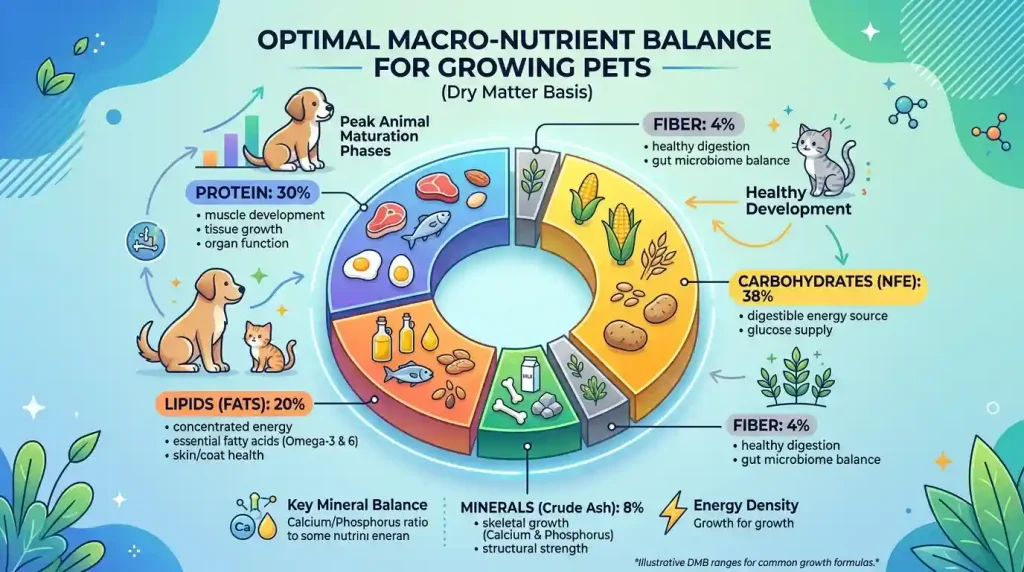
In addition to structural proteins, developing nervous systems require high levels of long-chain omega-3 fatty acids, particularly docosahexaenoic acid (DHA). Pet Growth This vital lipid serves as a primary structural component in brain tissue and retinal membranes. Ensuring consistent DHA intake during early development directly supports cognitive ability, coordinates motor skills, and improves overall trainability as your companion grows.
Compelled Diagnostics: Spotting Deviations in Pet Growth Curves
Identifying Signs of Stunted Development
Sustained deviations from a natural, linear developmental path always indicate an underlying health issue that requires prompt attention. Stunted development or sudden weight plateaus rarely stem from genetics alone; they are frequently caused by underlying medical conditions that drain the body’s resources. Catching these subtle physical shifts early allows you to correct course before long-term damage occurs.
- Intestinal Parasite Overload: Heavy roundworm or hookworm infections can consume vital nutrients within the digestive tract, starving the young animal of the fuel needed for healthy muscle and bone formation.
- Congenital Shunts (Portosystemic Shunts): This circulatory abnormality bypasses the liver, preventing toxic metabolic byproducts from being filtered out. Pet Growth This deprives the body of essential nutrients, leading to poor growth, low muscle tone, and neurological issues.
- Persistent Joint Inflammation: Ongoing stiffness, hesitant movement, or an asymmetrical gait indicates that bone and cartilage development has gone off track, requiring immediate orthopaedic assessment.
Whenever an animal’s growth curve flattens for more than two consecutive weekly check-ins, it is time for a thorough veterinary evaluation. Early diagnostic blood work and diagnostic testing can pinpoint the root cause, allowing you to restore a healthy growth trajectory.
Environmental and Epigenetic Influences
An animal’s ultimate physical outcome is shaped by a continuous interaction between their genetic blueprint and their daily environment—a process known as epigenetic expression. While genetics determine maximum size potential, daily factors like footing surfaces, exercise routines, pet growth and sleep quality directly influence how those genes express themselves during development.
Raising young, rapidly expanding pets on slick hardwood or tile flooring can introduce ongoing stability challenges. The constant micro-slipping places unnatural lateral strain on developing tendons and joint capsules, increasing the risk of hip laxity. Furthermore, because growth hormone is released in rhythmic pulses during deep sleep, providing a quiet, dedicated resting space is essential to ensure the body can repair and build new tissue effectively.
The Pet Growth Comparative Matrix: Species, Breeds, and Velocities
To manage development effectively, you must tailor your approach to your companion’s specific breed category and species template. A tiny Toy Poodle, a massive Great Dane, and a domestic shorthair cat follow entirely different developmental timelines, metabolic rates, and nutritional requirements. Pet Growth The comparison table below details these distinct developmental pathways, offering clear, actionable tracking guidelines for each group.
Comprehensive Development and Tracking Matrix of Pet Growth
| Breed / Species Category | Average Adult Weight Range | Peak Velocity Window | Growth Plate Closure Window | Primary Structural Risk Focus | Target Body Condition Score (BCS) | Expert Management Recommendation |
| Toy/Small Canine Breeds (e.g., Yorkies, Chihuahuas) | 4 to 15 lbs | Months 2 to 4 | Months 9 to 10 | Hypoglycemia, Medial Patellar Luxation | 4.5 out of 9 (Lean lean) | Feed small, frequent meals to maintain stable blood sugar; avoid high-energy mineral supplements. |
| Medium Canine Breeds (e.g., Bulldogs, Border Collies) | 25 to 50 lbs | Months 3 to 5 | Months 11 to 12 | Joint Laxity, Early Tendon Strains | 5.0 out of 9 (Balanced) | Balance free-form play with structured, low-impact exercise; monitor body contours weekly. |
| Large/Giant Canine Breeds (e.g., Great Danes, Mastiffs) | 70 to 150+ lbs | Months 4 to 8 | Months 14 to 18 | Developmental Orthopedic Diseases, Dysplasia | 4.0 out of 9 (Very strict lean) | Keep calories restricted to maintain a lean frame; ensure a strict 1.2:1 calcium-to-phosphorus ratio. |
| Standard Domestic Felines (e.g., Shorthair, Siamese) | 8 to 12 lbs | Months 2 to 5 | Months 10 to 11 | Lean Tissue Acquisition, Bone Thinning | 5.0 out of 9 (Proportional) | Provide high-protein, low-carbohydrate options; encourage vertical climbing to build muscle. |
| Large/Giant Feline Breeds (e.g., Maine Coons, Savannahs) | 15 to 25 lbs | Months 5 to 12 | Months 18 to 24 | Delayed Radial Epiphyseal Closure, Hip Strains | 4.5 out of 9 (Slightly lean) | Extend growth-specific nutrition past one year; monitor long-bone alignment continuously. |
Systematic Preventative Care for Maturing Structural Systems
The Pitfalls of Over-Supplementation
Many pet owners mistakenly attempt to accelerate development by introducing single-nutrient supplements, such as calcium pills, synthetic vitamin D, or concentrated protein powders. This well-intentioned approach often backfires, disrupting the body’s natural regulatory systems and creating severe metabolic imbalances.
High doses of synthetic vitamin D can force the body to absorb calcium uncontrollably, leading to calcified soft tissues and potential kidney damage. Similarly, adding excess phosphorus without adjusting calcium levels strips vital minerals from the skeleton, leaving bones weak and brittle. Trust high-quality, scientifically balanced commercial growth diets, which are already carefully formulated to deliver the exact nutrient ratios required for safe development.
Designing Safe Physical Exercise Routines
Pet Growth: Protecting an animal’s long-term mobility requires a well-structured exercise routine that delivers healthy stimulation without overloading vulnerable joints. Focus on natural, self-guided movement on soft, natural surfaces that allow your companion to rest whenever they choose.
Pet Growth Avoid repetitive, high-impact activities like distance jogging on concrete, high-jump agility training, or intense fetch games that require sudden, sharp turns. These high-stress movements place immense strain on loose joints and fragile growth plates. Instead, focus on short, controlled walks, light swimming, and mental enrichment games that build coordination and core strength without overtaxing the skeleton.
Evidence-Based Answers to Vital Pet Growth Questions
Q1: How can I tell if my large-breed puppy is growing too fast?
Pet Growth A rapid increase in body weight without a corresponding increase in bone density is a clear warning sign. If your puppy begins showing a dropped, “east-west” orientation in their front paws, shifts their weight unevenly, or displays noticeable shifting lameness after everyday activities, their skeletal system is struggling to support their weight. You must immediately assess their caloric intake and consult your veterinarian.
Q2: When do the growth plates close in large canine breeds?
In large and giant breeds, the epiphyseal plates along the long bones do not fully calcify and close until fourteen to eighteen months of age. Because these zones remain soft and dynamic throughout this extended window, keeping the animal lean and avoiding high-impact exercise during this time is absolutely essential for long-term structural health.
Q3: Can I feed my large-breed puppy standard all-life-stages food?
No, standard all-life-stages formulas often feature caloric densities and calcium-to-phosphorus ratios designed for smaller animals, which can accelerate growth too quickly in larger breeds. Large-breed puppies require specialised formulas with lower energy densities and carefully managed mineral levels to ensure a steady, safe developmental pace.
Q4: Why does my kitten seem to grow in asymmetrical bursts?
Feline development naturally progresses in shifting, non-linear phases. A week of rapid skeletal lengthening is often followed by a period where the body fills out with muscle and fat. This shifting pattern is completely normal, provided the animal maintains a consistent body condition score of 5 and remains active and energetic.
Q5: How does early neutering affect structural pet growth?
Removing reproductive hormones before the growth plates naturally close takes away the hormonal triggers that signal the end of bone elongation. As a result, the long bones grow longer than intended, creating taller, leggier frames with altered joint angles that are significantly more vulnerable to future ligament injuries.
Q6: What should I do if my pet falls behind on their growth chart?
First, perform a thorough veterinary check to rule out common underlying issues like intestinal parasites, metabolic conditions, or nutritional deficiencies. If the animal receives a clean bill of health, accept their unique developmental pace; forcing rapid weight gain through overfeeding will only build unhealthy fat and strain their joints.
Q7: Are raw diets safe for managing optimal structural development?
While raw diets can provide excellent, highly bio-available nutrients, formulating them accurately at home for growing animals is incredibly difficult. Without professional veterinary analysis, home-prepared raw meals often suffer from improper calcium-to-phosphorus ratios, which can lead to severe metabolic bone disease within weeks.
Q8: How often should I track and document my growing pet’s weight?
During the peak development phase—from two to six months of age—record your companion’s weight and body condition score every single week. This consistent tracking allows you to catch any sudden drops or spikes early, making it easy to fine-tune their daily caloric intake and keep them on a healthy path.
Conclusion
Successfully guiding a young companion through their pet growth journey requires a careful balance of proactive biometric tracking, precise nutritional management, and protective exercise routines. Pet Growth: Recognising that development is a complex biological process—rather than a simple race to maximum size—allows you to make informed choices that protect your pet’s long-term skeletal and muscular health. By keeping a close eye on structural growth milestones, maintaining an ideal, lean body condition, and protecting fragile growth plates from physical stress, you can prevent common developmental issues before they start. The dedication, consistency, and care you invest during these formative early months will provide the pet growth foundation for a vibrant, energetic, and pain-free life for years to come.
Key Takeaways
- Prioritise Development Quality Over Pet Growth: Rapid development compromises skeletal density, increasing the risk of lifelong orthopaedic issues.
- Keep Your Pet Lean: Maintain a strict body condition score of 4 to 5 to protect fragile, developing joints from excess stress.
- Balance Critical Minerals: Keep the calcium-to-phosphorus ratio tightly managed between 1.1:1 and 1.3:1 to ensure healthy bone calcification.
- Protect Vulnerable Growth Plates: Avoid high-impact exercise and slick flooring until the epiphyseal plates have fully fused.
- Track Progress Consistently: Document weight and body condition weekly to spot developmental shifts and address potential health concerns early.
Next Action
To ensure your companion pet’s growth stays on a healthy path, print out a breed-specific development chart and perform your first hands-on body condition score check tonight. Feel along the side of the rib cage to check for a healthy, lean frame, and adjust their daily portion sizes based on these real-world physical indicators rather than relying solely on generic package guidelines.
