Dog in Spanish: 9 Important Dog Words Every Spanish Learner Should Know
Table of Contents
Dog in Spanish is a fundamental phrase for anyone looking to communicate about canines in the Spanish-speaking world. While “perro” is the universally recognized term, the Spanish language, rich in its regional variations and cultural expressions, offers a surprising array of words, phrases, and idioms related to our four-legged friends. Understanding these nuances goes beyond mere translation; it provides insight into the diverse roles dogs play in Hispanic cultures, from cherished family members to working animals, and even figures in folklore and slang. This comprehensive guide will delve into the various ways to refer to dogs in Spanish, explore their grammatical intricacies, uncover regional differences, and shed light on the cultural significance of these beloved animals.
The Primary Translation: “Perro” and its Nuances

The most universal and standard way to say “dog” in Spanish is perro. This masculine noun is understood across all Spanish-speaking countries and is appropriate in both formal and informal contexts. When referring to a male dog, you use el perro, and for a female dog, you use la perra. It’s crucial to remember that perro is a masculine noun, so any accompanying determiners and adjectives must also be masculine. For example, “a dog” is un perro, and “the black dog” is el perro negro.
While perra correctly refers to a female dog, it’s important to note that, much like its English equivalent “bitch,” perra can also carry a pejorative or vulgar connotation when referring to a woman. Therefore, discretion is advised when using perra, and it’s generally best to use it when the gender of the dog is specifically relevant, such as with a pet you know well or in a breeding context.
Beyond perro, other words exist for specific contexts:
- Can: This is a more formal or literary term for “dog,” often found in scientific contexts or when describing dogs symbolically. You are unlikely to hear can in everyday conversation.
- Cánido: Translating to “canine” or “canid” in English, this term is used in scientific discussions to refer to dogs as part of their biological family.
- Cachorro: This word specifically means “puppy” or a young dog. Like perro, it has a feminine form, cachorra, for a female puppy.
- Perrito / Perrita: These are diminutives of perro and perra, respectively. Adding the suffix “-ito” (masculine) or “-ita” (feminine) expresses smallness or affection, making them equivalent to “doggy” or “little dog” in English. Interestingly, perrito can also mean “hot dog” in some contexts, but the meaning is usually clear from the conversation.
Feminine and Plural Forms of “Perro”
Understanding the gender and number of nouns is fundamental in Spanish grammar. As established, perro is a masculine noun. Its feminine counterpart is perra. When referring to multiple dogs, the plural forms are used:
- Masculine Plural: Los perros (the dogs, generally referring to a group of male dogs or a mixed group of male and female dogs).
- Feminine Plural: Las perras (the female dogs, specifically referring to a group of female dogs).
This grammatical rule applies consistently to related terms as well. For example, the plural of cachorro (puppy) is cachorros, and for a group of female puppies, it would be cachorras. Similarly, for the affectionate diminutive forms, the plurals are perritos and perritas.
It is important to always match the gender and number of adjectives and articles with the noun. So, if you are talking about “two happy Dog in Spanish,” and they are a mixed group or all male, you would say dos perros felices. If they are all female, it would be dos perras felices.
Regional Variations and Slang for Dogs
Just like in English, where “dog” can be replaced by terms like “hound,” “mutt,” or “pooch,” Spanish also boasts a rich tapestry of regionalisms and slang words for Dog in Spanish. These terms often carry specific connotations, ranging from affectionate to derogatory, and their usage can vary significantly from one Spanish-speaking country to another.
One notable example is chucho. In many regions of Spain and Latin America, chucho is a less formal, often affectionate way to refer to a dog, akin to “mutt” or “mongrel.” However, its connotation can shift; in some areas, it might be slightly derogatory, especially when referring to stray or mixed-breed dogs. The feminine form, chucha, also exists, but care is needed as it can have vulgar meanings in certain Latin American regions.
Other popular informal or slang terms include:
- Firulais: A playful name often used for a dog, particularly common in some Latin American countries.
- Lomito: This affectionate term literally translates to “little loin” but is used to refer to dogs, especially small ones, and often carries a sense of endearment.
- Peludito / Peludo: Meaning “hairy one” or “furry one,” these terms are affectionate ways to describe a dog, especially one with a lot of fur.
- Perrijo / Perrija: A blend of “perro” (dog) and “hijo” (son) or “hija” (daughter), signifying a dog that is treated like a child in the family. This highlights the deep emotional bond many people share with their pets.
- Chusco: Similar to chucho, this term can also mean “mutt” or “mongrel.”
- Mi gordo/a: An affectionate term meaning “my chubby one,” often used for a well-fed or cuddly dog.
- Fido: A common Dog in Spanish name that can sometimes be used generally.
It’s also worth noting how the word “perro” itself can take on various meanings in slang, particularly in Mexico. Depending on the context, “perro” can describe something difficult, awesome, or even be used in sexually ambitious or career-ambitious contexts. It can also be a verb, “to dog,” referring to a certain type of dancing or a group aggressively gathering. In some informal settings, “perro” can even denote a close friend or associate.
Describing Dogs: Adjectives and Characteristics
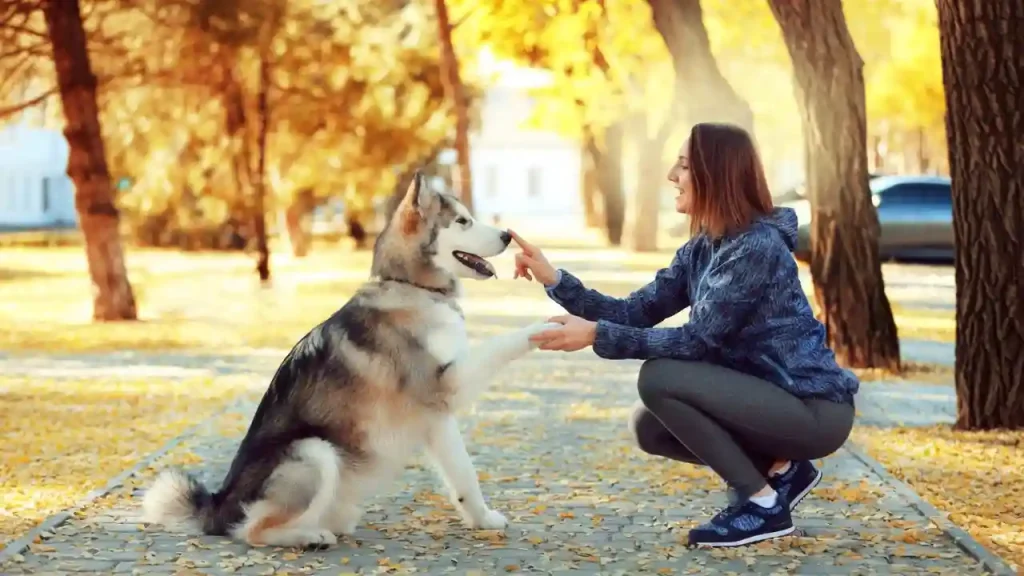
When describing dogs in Spanish, a rich vocabulary of adjectives and phrases can be employed to convey their appearance, behavior, and personality. The choice of adjective, like all adjectives in Spanish, must agree in gender and number with the noun it modifies. Below are some common ways to describe dogs:
| Spanish Term | English Translation | Context/Notes |
|---|---|---|
| Grande | Big | Perro grande (big dog) |
| Pequeño/a | Small / Little | Perro pequeño (little dog) |
| Bonito/a | Pretty / Beautiful | Used for attractive dogs. |
| Lindo/a | Cute / Lovely | Similar to bonito/a. |
| Negro/a | Black | El perro negro (the black dog) |
| Blanco/a | White | La perra blanca (the white female dog) |
| Mestizo/a / Cruza | Mixed-breed / Mutt | Describes a dog of unknown or mixed parentage. |
| Callejero/a / De la calle | Stray / Street dog | Refers to a homeless dog. |
| Castrado/a | Neutered / Spayed | Indicates the dog has been sterilized. |
| Juguetón/a | Playful | A dog that likes to play. |
| Fiel | Loyal / Faithful | A common attribute of dogs. |
| Tranquilo/a | Calm / Quiet | Describes a serene dog. |
| Inteligente | Intelligent | A smart dog. |
| Guapo/a | Handsome / Good-looking | Can be used for male or female dogs. |
| Sarnoso/a | Mangy | Describes a dog with mange. |
| Greñudo/a | Shaggy | Describes a dog with messy or untidy fur. |
Furthermore, specific physical features can be described using these terms:
- Orejas levantadas / paradas: Perky ears or erect ears.
- Orejas caídas / agachadas: Floppy ears.
- Cola corta / larga: Short/long tail.
- Pelo liso / rizado: Straight/curly hair.
Dog Breeds in Spanish
When discussing specific dog breeds, many names are similar or identical to their English counterparts, making identification relatively straightforward. For instance, “bulldog,” “labrador,” and “chihuahua” are often used as-is or with minor phonetic adjustments. However, some popular breeds have distinct Spanish names. The general term for “dog breed” is raza de perro or raza canina.
Here’s a list of common dog breeds with their Spanish translations:
- Bóxer: Boxer
- Caniche: Poodle
- Cobrador dorado / Labrador dorado: Golden Retriever
- Dálmata: Dalmatian
- Doguillo: Pug
- Galgo: Greyhound (specifically, Galgo Español for the Spanish Greyhound)
- Pastor Alemán: German Shepherd
- Perro esquimal: Husky
- Perro salchicha: Dachshund (literally “sausage dog”)
- San Bernardo: St. Bernard
- Perro de Terranova: Newfoundland
- Galgo Afgano: Afghan Hound
- Malamute de Alaska: Alaskan Malamute
- Terrier de Staffordshire Americano: American Staffordshire Terrier
- Pastor Ganadero Australiano: Australian Cattle Dog
- Pastor Australiano: Australian Shepherd
- Bernés de la Montaña: Bernese Mountain Dog
- Bichón Maltés: Maltese
- Boloñés: Bolognese
- Braco Alemán: German Shorthaired Pointer
- Braco de Weimar: Weimaraner
- Grifón de Bruselas: Brussels Griffon
- Bulldog Francés: French Bulldog
- Bulldog Inglés: English Bulldog
Some breeds are native to Spanish-speaking regions and bear Spanish names, such as the Chihuahua (originating from Mexico), the Perro de Agua Español (Spanish Water Dog), the Galgo Español (Spanish Greyhound), and the Dogo Argentino (Argentine Mastiff).
Common Phrases and Idioms with “Dog”

The word “dog” appears in many common Spanish phrases and idioms, reflecting its deep integration into the language and culture. Understanding these can greatly enhance communication and provide a more authentic grasp of Spanish expressions.
Here are some common phrases related to dogs:
- ¡Buen perro! / ¡Muy bien!: Good dog! / Very good! (Used for praise)
- ¿De quién es ese perro?: Whose dog is that?
- Tengo un perro.: I have a dog.
- Me encantan los perros.: I love dogs.
- Vamos a pasear el perro.: We’re going to walk the dog.
- Comida para perros: Dog food.
- Collar de perro: Dog collar.
- Perro guardián: Guard dog.
- Perro lazarillo: Guide dog.
- Perro de caza: Hunting dog.
- Perro faldero: Lap dog.
- Perro de las praderas: Prairie dog.
Idiomatic expressions also frequently feature “perro”:
- Perro que ladra no muerde.: Literally “A barking Dog in Spanish doesn’t bite,” equivalent to “All bark and no bite.”
- Estar como un perro.: To be very tired or exhausted, similar to “to be dog-tired.”
- Vida de perros.: A dog’s life, referring to a difficult or miserable existence.
- Llevarse como el perro y el gato.: To get along like cats and Dog in Spanish , meaning two people or groups are constantly fighting.
- Morir como un perro.: To die like a dog, implying a miserable or dishonorable death.
- Hacer un perro.: In some regions, this can mean to do a bad job or mess something up.
- Ser un perro viejo.: To be an old dog, referring to someone experienced and perhaps set in their ways.
These phrases demonstrate the versatility of “perro” and how deeply ingrained the concept of Dog in Spanish is within Spanish linguistic and cultural expression.
The Cultural Significance of Dogs in Spanish-Speaking Countries
Dog in Spanish hold a profound and multifaceted cultural significance in Spanish-speaking countries, extending far beyond their role as mere pets. In Latin America, in particular, Dog in Spanish are often regarded as “compañeros de vida” or “companions for life,” reflecting strong family values where loyalty, love, and care encompass four-legged friends. Unlike in some other parts of the world where dogs are primarily seen as domestic animals, in Latin American households, Dog in Spanish are frequently considered true members of the family. They are included in family celebrations, birthdays, religious events, and holidays like Christmas and Día de los Muertos.
Historically, dogs have played vital roles in ancient civilizations throughout Mesoamerica. For instance, the Xoloitzcuintli, or Mexican hairless dog, was revered by Aztec and Mayan civilizations, believed to possess mystical abilities and often buried with their owners to guide souls into the afterlife. The Aztec god of death, Xolotl, was even depicted with a Dog in Spanish head, with earthly dogs considered his emissaries. These ancient beliefs highlight Dog in Spanish as sacred symbols, protectors, hunters, and even spiritual guides.
The arrival of the Spanish conquistadors brought a different perspective on Dog in Spanish . The Spanish utilized war Dog in Spanish , often Mastiff breeds, for conquest and even for inflicting punishment on native populations, altering the perception of Dog in Spanish in the Americas. However, the deep indigenous respect for canines persisted and blended with new influences.
Today, the connection between Latin culture and Dog in Spanish is evident in various aspects of life. From dog-themed accessories to clothing expressing devotion to furry companions, Dog in Spanish are a significant part of popular culture. Many people treat their dogs with the same affection as human relatives, hosting birthday parties for them or including them in family portraits.
In Spain, Dog in Spanish are also deeply integrated into society, albeit with perhaps fewer overt ancient spiritual connections than in parts of Latin America. Hunting Dog in Spanish like the Galgo Español have a long history, though unfortunately, this has also led to issues of mistreatment in recent years. Overall, throughout the Spanish-speaking world, the loyalty, companionship, and even protective instincts of Dog in Spanish are highly valued, making them an inseparable part of cultural identity and daily life. The enduring phrase “man’s best friend” certainly resonates strongly within these cultures.
Conclusion
The journey to understanding “dog in Spanish” is a fascinating exploration into linguistics, grammar, and culture. While perro serves as the foundational term, the richness of the Spanish language provides a multitude of expressions—from the affectionate perrito and cachorro to regional slang like chucho and firulais. Navigating the correct usage of masculine and feminine forms, as well as pluralizations, is essential for accurate communication. Beyond the words themselves, Dog in Spanish hold a revered place in Spanish-speaking cultures, often considered integral family members with deep historical and spiritual ties, particularly in Latin America. Mastering these terms and appreciating their cultural context not only enhances one’s Spanish vocabulary but also fosters a deeper connection to the vibrant societies where these loyal companions are so dearly cherished. Whether you’re a pet owner, a language learner, or simply curious, recognizing the diverse ways to refer to a dog in Spanish enriches your understanding of both the language and the enduring bond between humans and canines across the Hispanic world. For further insights into the profound historical and cultural roles dogs have played in various societies, including ancient civilizations, you can consult resources such as Wikipedia’s extensive entry on dogs.