Pet Growth Chart: 10 Accurate Guides for Every Breed & Age

Table of Contents
Pet growth chart tracking ensures your animal achieves an ideal weight. Are they growing safely? Use our 10 accurate guides to optimize lifelong wellness.For veterinary professionals, breeders, and dedicated owners alike, utilizing an empirical pet growth chart serves as the primary defense against long-term developmental disorders. When you plot regular physical measurements onto verified, peer-reviewed data models, you uncover early indicators of metabolic stress, nutritional deficiencies, or a predisposition toward adult obesity. Physical development is a complex, non-linear progression that demands structured documentation across every stage of life.
Rather than looking at an animal’s progress through casual observation, utilizing a structured monitoring matrix ensures that every growth milestone aligns safely with healthy genetic potential. By matching raw weight, height, and age data with validated allometric tracking curves, you can make informed adjustments to your pet’s nutritional intake and exercise limits. This diagnostic reference guide outlines ten accurate growth profiles spanning multiple domestic species, explains the science behind centile tracking, and provides a clear blueprint for supporting your animal’s long-term musculoskeletal health.
The Science of Centile Channel Tracking in Domestic Animals

To interpret an accurate pet growth chart, you must first master the concept of centile channels. Clinical data gathered by institutions like the Waltham Petcare Science Institute demonstrates that domestic animals grow along specific, non-linear curves called centiles. These lines illustrate the natural spread of healthy weights across a target population.
A common misconception is that every growing animal should track directly along the 50th centile line. In reality, healthy development is defined by an animal consistently maintaining its own specific growth channel over time, whether that sits on the 10th or the 90th centile.
The primary indicator of a growth disturbance is when an animal’s measurements cross two or more centile lines in either direction. Upward jumps across channels often point to rapid fat storage that can lead to adult obesity, while downward drops frequently signal issues like failure-to-thrive, hidden parasites, or digestive conditions.
Canine Growth Metrics: Tracking the Five Core Size Classes
Canine development presents a unique challenge because adult weights can vary drastically across different breeds. To address this diversity, the Waltham framework divides dogs into distinct size categories to ensure accurate monitoring.
Guide 1: Toy Breed Development Metrics (Adult Mass < 6.5kg)
Toy breeds complete their skeletal growth rapidly, often locking in their full structural frame by 8 to 10 months of age. Because their growth window is compressed, early checks are essential. These small dogs require regular, high-precision monitoring using a scale that measures in fine increments to ensure stable progression without early growth stalls.
Guide 2: Small Breed Growth Vectors (Adult Mass 6.5kg – 9kg)
Small breeds follow a slightly longer developmental curve than toy breeds, reaching roughly half of their mature adult weight between 12 and 16 weeks of age. Their physical development usually plateaus near the 12-month mark, making it a critical point to adjust their caloric intake downward to prevent unhealthy fat accumulation.
Guide 3: Medium Breed Mass Trajectories (Adult Mass 9kg – 15kg)
Medium-sized dogs exhibit a balanced, steady growth curve. They reach approximately 50% of their final adult mass around 20 weeks of age. For these dogs, tracking structural height alongside weight helps ensure that muscle development keeps pace evenly with skeletal scaling.
Guide 4: Large Breed Structural Progressions (Adult Mass 15kg – 30kg)
Large breeds grow across an extended timeline, meaning they remain vulnerable to developmental joint conditions for longer periods. Their epiphyseal growth plates often stay open until 14 to 16 months of age. Owners must monitor these Pet Growth Charts carefully to prevent sudden weight spikes that can place excessive stress on developing skeletal structures.
Guide 5: Giant Breed Skeletal Scaling Templates (Adult Mass > 40kg)
Because generic tracking tools struggle to capture the unique developmental needs of giant dogs, these animals require highly tailored individual monitoring Pet Growth Charts. A giant breed can continue building bone density and filling out its frame for up to 24 months. Keeping their growth steady and controlled during this extended phase is crucial for long-term orthopedic health.
Feline Growth Profiles: Tracking Biological Development
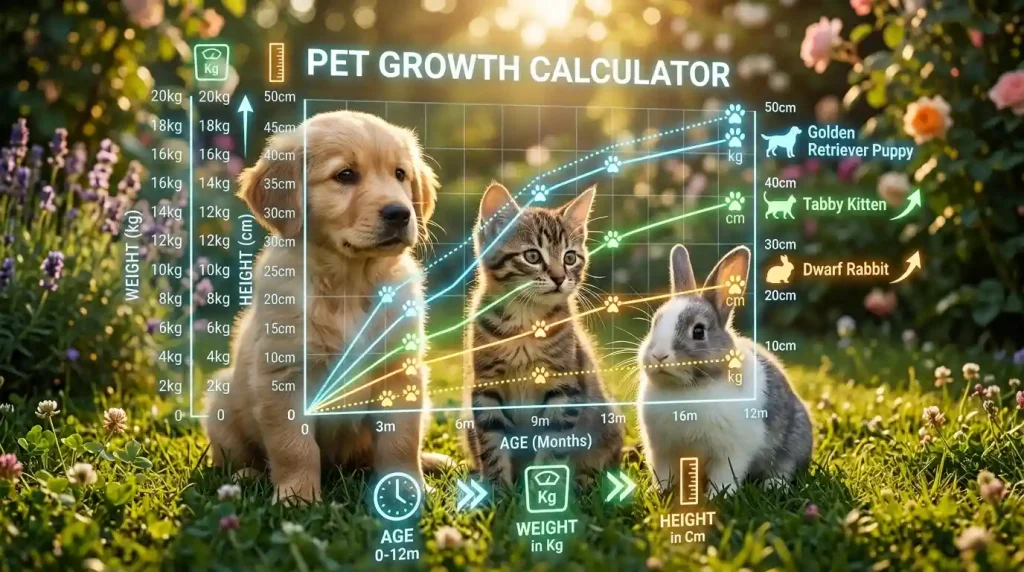
Feline development follows a more uniform path than canines, though it still requires precise tracking to monitor overall physical health.
Guide 6: Standard Female Feline Centile Progressions
Healthy female kittens show a rapid, steady increase in body mass up to 24 weeks of age. When monitoring a female kitten, look for a smooth progression along her established centile path. Sudden flatlines in her weight curve prior to maturity are often an early sign of digestive or metabolic issues.
Guide 7: Standard Male Feline Development Trajectories
Male kittens typically follow a higher overall growth path than females, showing an increased rate of muscle tissue deposition. Their Pet Growth Charts usually trend toward higher centile channels, and they require close nutritional tracking around the time of neutering to ensure their metabolism remains balanced as their growth slows.
Guide 8: Large-Frame Feline Varieties (Maine Coon / Savannah Profiles)
Slow-maturing, large-frame cat breeds do not align well with standard feline growth tables. A Maine Coon, for instance, can continue expanding its frame and building muscle mass for 3 to 5 full years. For these larger cats, tracking structural measurements alongside weight helps verify that their physical mass scales safely alongside their frame.
Lagomorph & Small Mammal Lifecycles: Tracking Precise Patterns
Small mammals feature delicate metabolic systems, making regular growth tracking an essential tool for monitoring their overall wellbeing.
Guide 9: Domestic Rabbit Breed Weight and Mass Benchmarks
Domestic rabbits span a wide range of sizes, from 1kg Netherland Dwarfs to 8kg Continental Giants. Because dense fur can easily hide a rabbit’s true physical condition, regular hand examinations along the ribs and spine are necessary alongside scale checks. Tracking their metrics on a dedicated weight Pet Growth Chart ensures their nutritional needs are being met without overfeeding.
Guide 10: Pocket Pet Milestone Parameters (Guinea Pigs & Hamsters)
Pocket pets like guinea pigs and hamsters have incredibly fast developmental cycles, reaching sexual maturity in just a few weeks. Monitoring their growth on a weekly Pet Growth Chart during these early phases is a simple way to catch development issues or identify hidden health problems early.
How to Correctly Plot and Interpret an Animal’s Growth Curve
To get accurate results from a pet growth chart, you must follow strict, consistent measurement protocols. Shifting your tracking routines can introduce errors that distort your long-term data trends.
- Establish Baseline Consistency: Always weigh your animal using the same scale, at the same time of day, and ideally before their first morning meal. Small fluctuations from recent meals or bathroom breaks can easily cloud short-term measurements.
- Set Your Tracking Schedule: For young, rapidly growing animals, checking weights every 2 to 4 weeks provides an ideal level of detail. As your pet approaches maturity, you can transition to tracking every 1 to 3 months until they reach full adult size.
- Monitor Trajectory Consistency: Do not worry about chasing a specific target number on the Pet Growth Chart. Focus instead on ensuring your pet’s data points plot smoothly along their chosen centile channel, which indicates a healthy, stable development rate.
The Ultimate Multi-Species Growth Metric Comparison Matrix
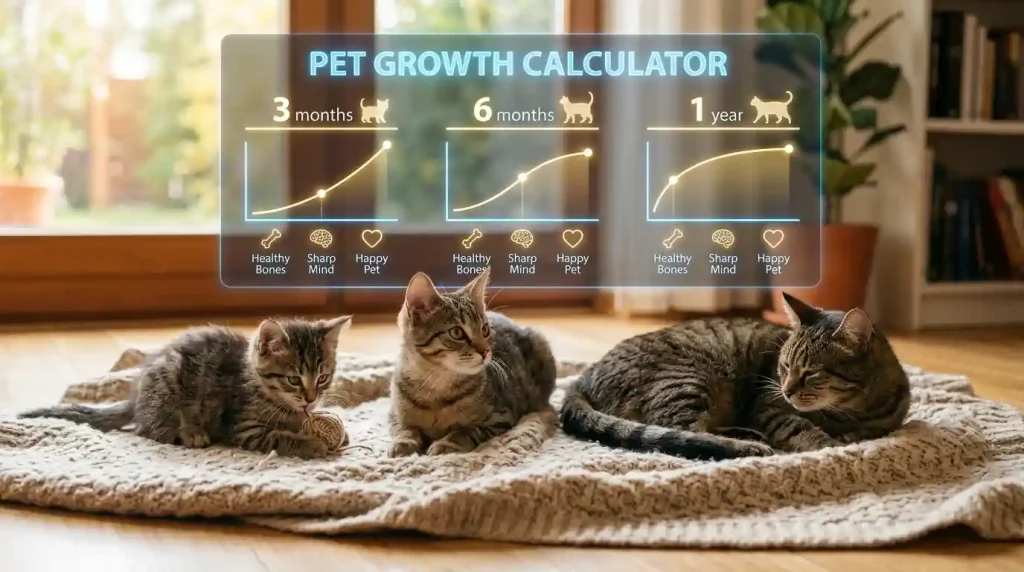
This comprehensive master reference table outlines the typical developmental timelines, peak growth periods, and tracking requirements across different pet groups.
| Animal Classification | Peak Growth Window | Skeletal Maturity Age | Tracking Frequency | Primary Measurement Focus | Common Developmental Pitfalls |
| Toy Breed Canines | 2 – 5 Months | 8 – 10 Months | Bi-Weekly | High-precision weight tracking ($g$ / $oz$). | Early growth plateaus from minor illnesses. |
| Medium Breed Canines | 3 – 6 Months | 12 Months | Every 3 Weeks | Combined weight and shoulder height check. | Structural imbalances during sudden growth spurts. |
| Giant Breed Canines | 4 – 12 Months | 18 – 24 Months | Monthly | Body mass index and joint alignment checks. | Excessive weight loading on open growth plates. |
| Domestic Felines | 2 – 6 Months | 12 Months | Monthly | Linear mass accumulation tracking. | Early fat storage leading to adult obesity risks. |
| Domestic Rabbits | 1 – 4 Months | 6 – 10 Months | Monthly | Spinal palpation paired with scale weight. | Long fur hiding poor muscle tone or fat accumulation. |
| Pocket Mammals | 2 – 8 Weeks | 4 – 6 Months | Weekly | Rapid base weight monitoring. | Missing early indicators of metabolic conditions. |
Frequently Asked Questions (FAQ)
What should I do if my pet’s weight curve flatlines before maturity?
A completely flat growth line during a major developmental phase is a common indicator of a potential growth disturbance. Double-check your recent measurements for accuracy, and consult your veterinarian to rule out issues like food sensitivities, poor nutrient absorption, or internal parasites.
How do I determine which centile line is the right target for my pet?
There is no single “ideal” target centile line on a Pet Growth Chart. Healthy development is simply defined by your pet tracking steadily along the same channel over time, whether they naturally trend higher or lower than average.
Can a single growth chart accurately track mixed-breed animals?
Mixed-breed animals can be tracked effectively by identifying their dominant breed traits or using their six-month weight to find a matching centile channel. The key is monitoring for a smooth, steady progression over time rather than matching an exact breed standard.
How frequently should I record measurements on a pet growth chart?
For young animals under six months old, recording measurements every 2 to 4 weeks provides an excellent balance of data. Once past this rapid phase, moving to an every-1-to-3-month schedule works perfectly until they reach full maturity.
Why is rapid tracking more accurate than just checking a body condition score?
Scale weight provides an exact, objective data point that can reveal small physical changes early. A body condition score (BCS) is a more subjective visual check that often requires a significant shift in body mass before a change becomes noticeable.
Do male and female animals require separate growth charts?
Yes. Male and female animals display distinct hormonal profiles and muscle-to-fat deposition rates, meaning they require separate reference curves to ensure accurate monitoring.
Can an illness cause a temporary deviation on my pet growth chart?
Yes, minor illnesses like a brief bout of gastroenteritis can cause a temporary pause in development. In most cases, pets will experience a natural growth surge and return to their original centile line once they recover.
At what point should a sharp upward curve on a pet growth chart cause concern?
A sharp upward turn that crosses multiple centile lines signals a rapid acceleration in fat storage. This trend is a reliable indicator of an increased risk for obesity, signaling that it is time to review your pet’s portion sizes and activity levels.
Actionable Milestone Implementation Checklist
To build a reliable, data-driven tracking routine for your home, complete these essential operational steps:
- Step 1: Select the correct growth chart template based on your pet’s exact species, sex, and projected size category.
- Step 2: Use your pet’s official records to confirm their exact birth date so you can accurately track their age in weeks.
- Step 3: Perform an initial weigh-in using a calibrated digital scale, making sure to remove heavy collars or harnesses before measuring.
- Step 4: Set up a simple recurring alert on your calendar to record new data points every two to four weeks.
- Step 5: Plot each new measurement on your pet growth chart to confirm your pet is maintaining a steady path within their chosen growth channel.
- Step 6: Share your tracking pet growth charts with your veterinarian during routine wellness visits to verify their long-term development progress.
Final Pathways to Long-Term Pet Wellness
Key Takeaways
- Channel Consistency: Healthy growth is defined by an pet remaining steadily within its own centile channel over time, rather than fighting to hit a specific median average.
- Early Intervention: Tracking trends on a pet growth chart allows you to identify potential growth stalls or early signs of obesity well before they cause structural harm.
- Tailored Approaches: Customizing your monitoring routine to match your pet’s specific size class or species prevents common errors and ensures highly accurate tracking.
- Objective Tracking: Combining regular scale measurements with physical body condition checks delivers a complete, accurate view of your animal’s physical development.
Next Action
Take a few moments today to locate your pet’s official birth records and calculate their exact age in weeks. Complete a fresh weigh-in using a clean, digital scale; plot that initial point on a matching reference pet growth chart; and begin building a reliable foundation for your animal’s long-term physical health.