Pet Grow a Garden: 12 Essential Tips for a Safe Pet-Friendly Garden
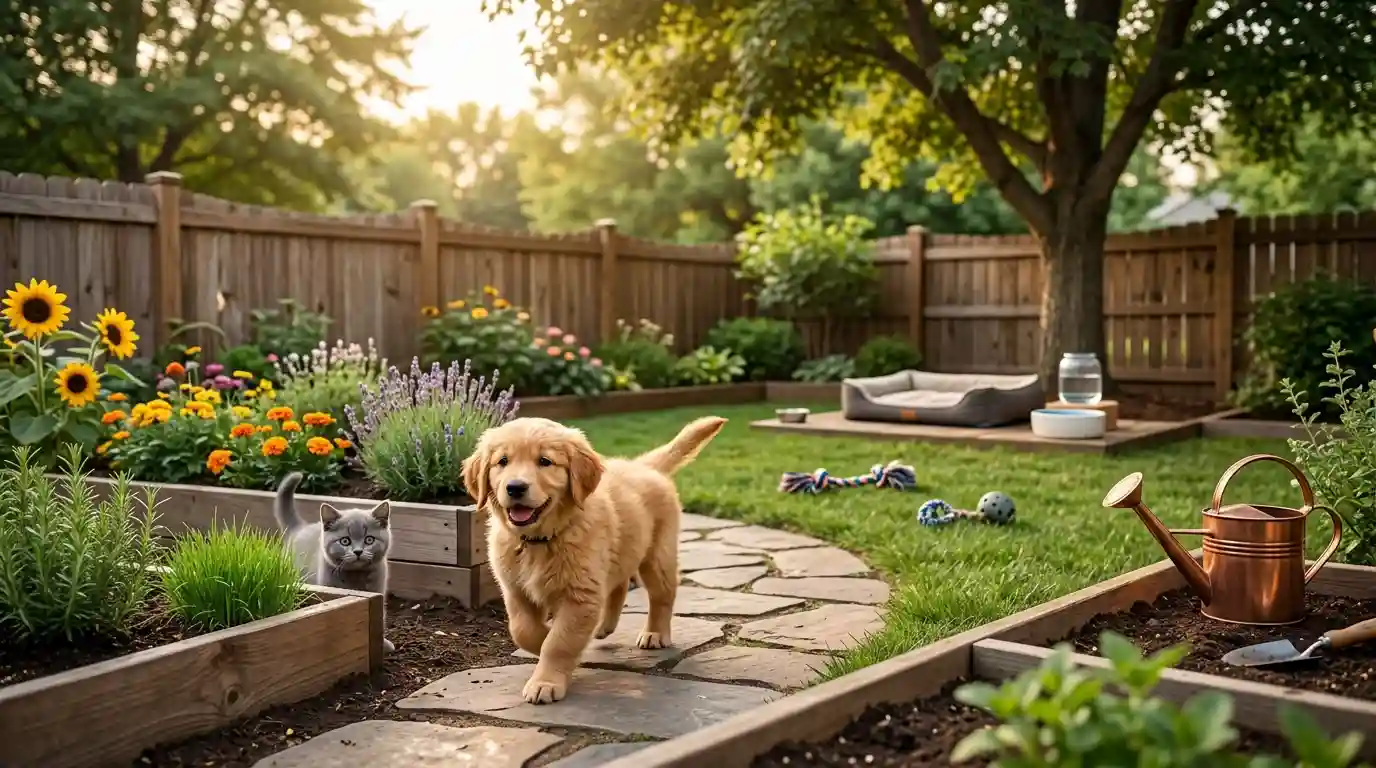
Table of Contents
A happy Golden Retriever plays among safe, pet-friendly flowers in a backyard garden. This scene highlights how thoughtful design lets pets enjoy the outdoors securely. Creating a pet-friendly garden means choosing non-toxic plants, providing shade, water, and shelter, and securing hazards. For example, Washington State University extension recommends pet-safe shrubs and perennials (camellias, magnolias, and ornamental grasses, e.g., echinacea and rudbeckia) for dog-friendly yards, whereas highly toxic plants like true lilies (Lilium spp.) and azaleas (Rhododendron spp.) must be avoided. Basic steps include fencing off flower beds, supplying fresh water, and using organic mulch. Any pet owner can “grow a garden” that is both lush and safe by planning carefully.
Planning a Pet-Friendly Garden
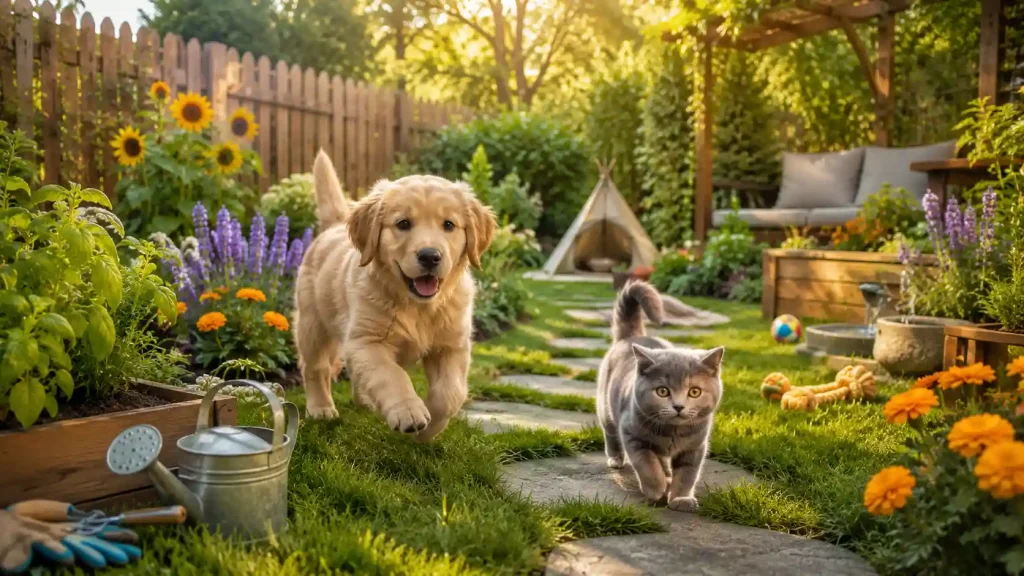
- Design for Safety: Install sturdy fencing or barriers around sensitive plantings. Leave a gap between the fence and plants (dogs “love running the fence line,” so extra space prevents damage to shrubs). Use tall planters or raised beds for herbs and flowers that pets could dig up. Provide a shaded area (trees or a canopy) and always keep clean water available. Use organic compost or pet-safe fertilizers instead of chemical products.
- Pest Control Caution: Many common pest control products are toxic to pets. Snail/slug baits, rodenticides, and garden herbicides can poison dogs and cats if ingested. Only use pet-safe methods (barriers, diatomaceous earth, or integrated pest management). Store all chemicals securely away from pets.
- Regular Maintenance: Keep the lawn trimmed and clean up fallen leaves or fruit that pets might eat. Monitor pets as they explore the yard. Even “non-toxic” plants can cause upset stomachs if eaten in quantity. For instance, daylilies (Hemerocallis) may not kill dogs but can still cause vomiting.
Safe Plants vs. Toxic Plants
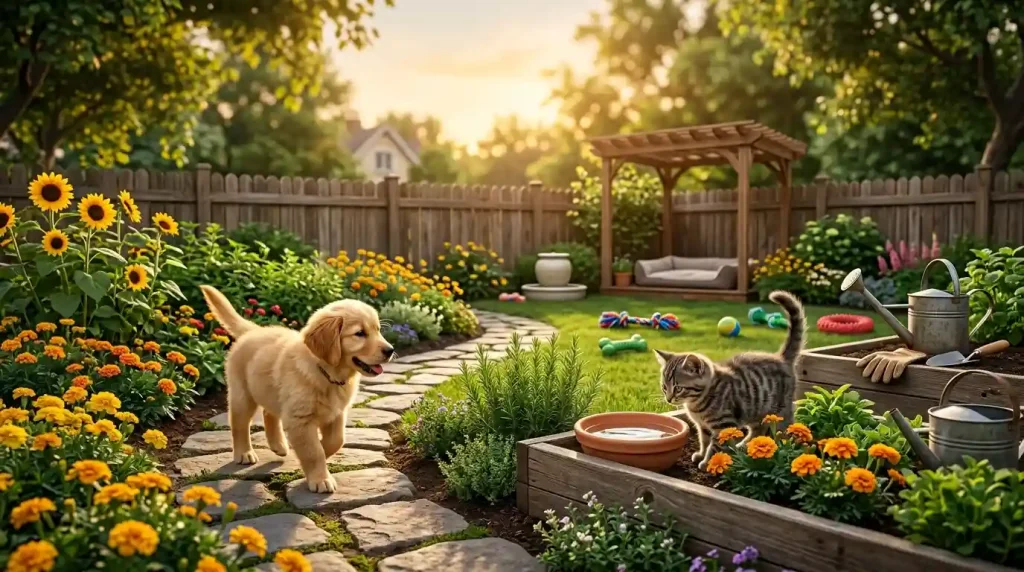
A black cat explores a lush backyard garden full of pet-friendly plants. Certain flowers and herbs are non-toxic and beneficial for pets, while others are dangerous. For example, common garden herbs like rosemary, basil, sage, and thyme are safe to grow around dogs and cats. Safe ornamentals include marigolds (Tagetes), snapdragons (Antirrhinum), sunflowers (Helianthus), zinnias, bee balm, echinacea, dahlias, and coreopsis. In contrast, avoid planting lilies, tulips, daffodils, azaleas, oleander, or yew. English ivy (Hedera helix) and oleander (Nerium oleander) can cause drooling, gastrointestinal distress, seizures, or even death if pets nibble them. The table below summarizes six important examples of pet-safe vs. toxic plants:
| Plant (Common Name) | Scientific Name | Toxicity Level (for pets) | Safe Alternative (if Toxic) |
|---|---|---|---|
| Marigold | Tagetes spp. | Non-toxic (pet-safe)** | n/a |
| Rosemary | Salvia rosmarinus | Non-toxic (pet-safe)** | n/a |
| Sunflower | Helianthus annuus | Non-toxic (pet-safe)** | n/a |
| Lily (true lily) | Lilium spp. | Highly toxic (cat kidneys) | Plant sunflowers instead |
| Oleander | Nerium oleander | Highly toxic (cardiac glycosides) | Petunia or marigold |
| English Ivy | Hedera helix | Moderate to severe (GI issues) | Daisy or nasturtium |
Safe Garden Layout and Care
- Secure Boundaries: Fencing is key to keep pets contained and plants protected. For example, leaving a 1–2m buffer between the fence and young plants prevents dogs from digging them up. Install kitty-proof netting or enclosures if cats roam.
- Safe Ground Cover: Use pet-safe mulch (cypress or pine) instead of cocoa hulls or sharp stones. Spread organic compost on soil; it’s safer than chemical fertilizers. Avoid mushroomy mulch that pets might eat.
- Water and Shade Stations: Place water bowls in the shade and ensure sunny spots have shaded retreats (umbrellas or trees). This prevents overheating and dehydration.
- Regular Checks: Walk the garden frequently to pick up pests (snails, insects) that could attract pets and to spot any plant damage. Keep poison control numbers handy if accidental ingestion occurs.
Choose Pet-Safe Plants, Plan Secure Layout, Install Fences/Barriers, Provide Shade & Water, Use Organic Soil & Mulch, Maintain & Monitor Regularly, Show code
Figure: Flowchart of key steps in setting up a safe pet-friendly garden.
Understanding Pet “Mutations” (Grow a Garden Game)
In the Grow a Garden game, players can obtain “mutations” for their virtual pets, giving them special powers. For example, using a Mutation Machine (in-game) costs 500 million Sheckles to add a mutation and reset a pet’s age. Mutations like “Radiant” cause a pet to emit sunshine that instantly advances a plant’s growth by 24 hours every half-hour. These playful game mechanics allow pets to boost garden growth. In reality, of course, animal genetics can’t be altered by machines—”mutations” are natural genetic variations or the result of breeding. Actual pet health relies on good nutrition and care, not magic plants. It’s worth noting that heavy chemical or radiation exposure could increase genetic damage in animals (e.g., causing cancers), but this is outside any normal garden context. In short, Grow a Garden mutations are fun fictional bonuses, whereas real-life pet well-being depends on veterinary care and a safe environment. (For example, certain dog breeds carry known gene mutations making them sensitive to drugs—again, something to manage responsibly.)
Most Valuable Garden Pets (Pet Values and Trading)
In Grow a Garden, pets have rarity tiers (common, rare, legendary, mythical, divine, prismatic) that affect their value. Prismatic and divine pets (like the Divine Red Fox, Divine Dragonfly, Divine Chimera, etc.) are highly sought after because they sell for more in-game. Community trading values pets in terms like “kit” (Kitsune), “rac” (Raccoon), or “df” (Divine Fang) depending on rarity. For example, when one player asked about a 69 kg dog’s worth, others noted it was only worth a common Kitsune or raccoon, not a top-tier pet. In contrast, a pet with a Golden or Radiant mutation can sell for 100× its base value. (This “sell multiplier” illustrates in-game pet value.)
In real life, pet value is different: it’s based on breed rarity, training, and pedigree, not digital multipliers. A rare dog breed may cost thousands to purchase, while a common mutt is inexpensive. However, unlike games, trading real pets is strictly regulated or discouraged; no true marketplace exists to monetarily value companion animals. In this article, “pet value” mainly refers to the Grow a Garden game economy and how players trade pets, rather than real-world pet worth.
Tips for Obtaining and Raising Valuable Garden Pets
Whether in the game or real life, investing in a pet’s health pays off. In Grow a Garden, valuable pets are usually acquired by hatching high-level eggs, completing quests, or trading. To raise a pet’s in-game worth, level it to 20 (max) and increase its weight. Pets naturally gain weight as they age, which boosts their efficiency. You can also use special items: for example, the ostrich pet (ID 52) adds weight immediately upon hatching—a strategic advantage.
Here are some general tips:
- Hatch high-tier eggs: Look for rare egg drops (e.g., from mystery chests or events).
- Daily quests: Completing tasks like harvesting berries accelerates pet growth.
- Use boosts: Feed pets “Fruit Juice” or use the ostrich trick to level faster.
- Trade smartly: Follow community guides on Discord/Reddit to know current pet prices. As one player noted, community feedback (like the dog-for-kitsune trade above) can be invaluable. Always follow the game’s trading rules (no real money trades).
In real life, analogous advice is to choose healthy, well-bred pets from reputable sources, provide excellent care, and consider their maintenance costs. A well-cared-for animal is more “valuable” in terms of longevity and quality of life.
Pet Growth Timeline (in the Garden)
0-6 months: "Puppy/Kitten Stage Exploring the new garden environment (supervision needed, minimal shaded areas). 6-12 months: "Juvenile Stage" Energetic and strong; can help in light garden tasks like digging or tracking pests. 1-5 years: "Adult Stage" Fully grown, ideal for training (fetching yard waste, etc.); maintain regular exercise & grooming. 5+ years: "Senior Stages" Slower pace; provide cushioned bedding, easy access to water, and gentler activities. Pet Growth Stages in Your Garden Show code
Figure: Simple timeline of pet growth stages in a garden context, from playful puppy/kitten to calm senior.
Frequently Asked Questions
Q1: What is a pet-friendly garden?
A pet-friendly garden is designed so pets (dogs, cats, rabbits, etc.) can enjoy it safely. This means using non-toxic plants, providing secure fences or enclosures, and avoiding any hazards like open water or chemical exposure. It should have shady spots, fresh water, and space for pets to play.
Q2: Which common plants should I avoid if I have pets?
Avoid known toxic species: true lilies (Lilium spp.), daylilies (Hemerocallis – toxic to cats), tulips, daffodils (Narcissus), azaleas/rhododendrons, oleander, yew, foxglove, sago palm, English ivy, and others. If unsure, check the ASPCA Poison Plant list for any plant you consider adding. For example, lily ingestion can cause fatal kidney failure in cats.
Q3: How can I make my garden safe from pests without harming my pet?
Use pet-safe pest control methods. Instead of rodenticides or snail baits, use traps or barriers. Plant insect-repelling herbs (like lemongrass or citronella for mosquitoes, though keep essential oils away from pets). If you must spray, choose non-toxic options (like insecticidal soap) and keep pets indoors until it dries. Always read labels and follow veterinary guidelines on pet exposure.
Q4: What does “pet mutation” mean in Grow a Garden?
In Grow a Garden, a pet mutation is a game mechanic where players pay in-game currency to give a pet special powers (e.g., the Radiant mutation speeds up plant growth). It’s purely fictional – in reality, animal genetics are fixed at birth except for natural mutations.
Q5: Which pets are most valuable in Grow a Garden?
The most valuable pets are usually Divine or Prismatic tier (e.g., Divine Red Fox, Prismatic Tiger). Pets with Golden/Radiant/Butterfly mutations also sell for 100× base price. In community trades, rare species like kitsune or raccoon often represent high value. Check Grow a Garden’s forums or Discord for current “worth charts” to see which species are in demand.
Q6: How do I increase my pet’s sell value in the game?
Level your pet to max (age 20); increase its weight (through regular feeding, pets gain weight as they age); and obtain a “Sell Multiplier” mutation (Golden, Radiant, or Butterfly mutation) to boost its sell price by ×100. Earning the prismatic evolution (in later updates) or divine mutations also greatly raises value. Essentially, treat your best pet with extra boosts to make it more “valuable.”
Q7: How do I trade pets safely in Grow a Garden?
Use the game’s built-in trade function and confirm trade details carefully. Do not trade real money or personal information. Follow community guidelines (some Discords enforce “1:1 trades only, no load, no rip-off”). Verify the other player’s reputation if possible. Because pet values fluctuate (as noted in community threads), take your time to assess a fair trade.
Q8: Can real pets “mutate” or change like in the game?
No. Real pets can have genetic health issues or mutations from breeding, but these are natural, not controllable. You should focus on genetics through responsible breeding (pedigree health) and not expect fantastical powers. In gardens, ensure pets aren’t exposed to harmful chemicals or radiation (which can cause health problems but rarely any beneficial “mutation”).
Q9: Are there lists of pet-safe plants I can reference?
Yes. Authoritative sources like AAHA and extension services provide pet-safe plant guides. For example, AAHA lists 10 easy pet-safe garden plants (nasturtiums, calendula, impatiens, etc.). Extension sites (e.g., WSU, Illinois Extension) also publish lists of safe vs. toxic plants. Consult these before planting.
Q10: What if my pet eats a poisonous plant?
Contact your veterinarian or an animal poison control center immediately. Keep emergency numbers handy. If safe to do so, identify the plant ingested. Many vets will advise inducing vomiting only if the toxin is non-caustic. Time is critical, especially with plants like lilies or oleander. Never induce vomiting unless directed by a professional.
(Additional Q&A—about maintenance tips, or game-specific queries like “How do I get the Golden mutation?”—can be added as needed.)
Conclusion and Schema Suggestions
Designing a pet-friendly garden (“Pet Grow a Garden”) requires blending horticulture knowledge with pet care. Use the tips above – safe plant selection, thoughtful layout, and precautions – to let your pets enjoy a healthy outdoor space. Remember, a happy pet and a thriving garden can coexist with the right planning.
For SEO, include structured data: an Article schema with title, description, images, and author; a FAQPage schema for the Q&A section; and a BreadcrumbList schema reflecting site navigation (e.g., Home > Pet Care > Garden Tips). This markup will help search engines present the content effectively (Google Discover thumbnail, high CTR).
Sources: Authoritative guidelines on pet safety and gardening were used, including university extensions, the ASPCA Poison Control database, and Grow a Garden game wikis and community forums, to ensure accuracy in both real-life and game contexts.