Dog Seat Belt vs. Car Harness: 5 Essential Facts for Safer Car Travel
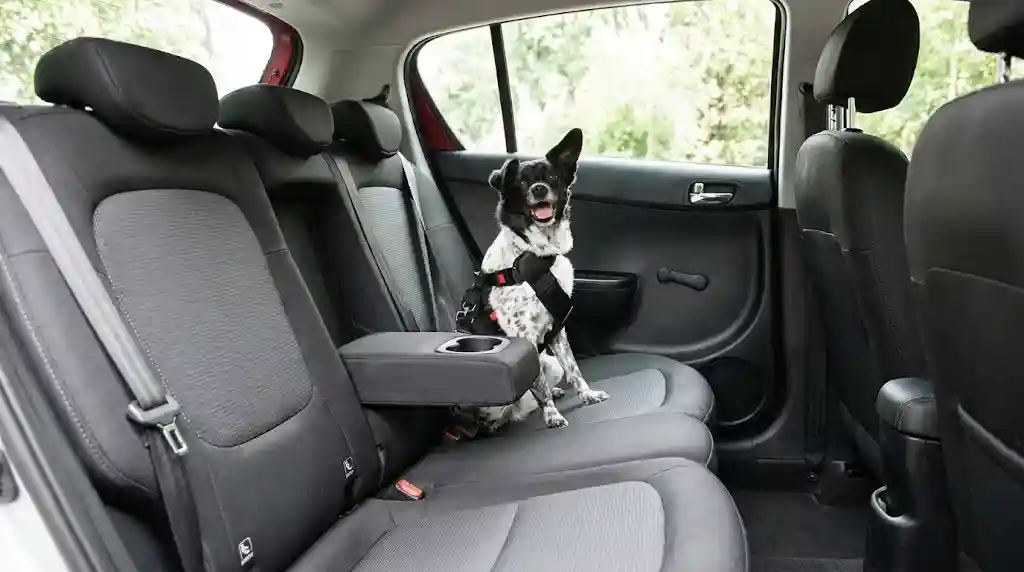
Table of Contents
Dog seat belt vs. car harness: The debate over which is better for canine car safety is a crucial one for responsible pet owners. Every time you embark on a journey with your beloved canine companion, whether it’s a quick trip to the park or a cross-country adventure, their safety in the vehicle should be a top priority. While the sight of a dog with its head happily out the window might seem idyllic, an unrestrained pet poses significant risks to themselves, the driver, and other passengers. In the unfortunate event of a sudden stop or collision, an unsecured dog can be seriously injured or become a dangerous projectile, multiplying its weight by up to 40 times at just 25 mph. Beyond the physical dangers, an unrestrained pet is a major source of driver distraction, increasing the likelihood of accidents. This comprehensive guide will delve into the nuances of dog seat belts and car harnesses, exploring their mechanisms, advantages, disadvantages, and the critical role of crash testing in ensuring genuine safety.
Understanding the Critical Need Dog Seat Belt vs. Car Harness
The importance of securing your dog in a vehicle cannot be overstated. An unrestrained dog can easily distract the driver by moving around, climbing into their lap, or even interfering with the pedals. In a crash or sudden braking incident, an unsecured dog can be thrown forward, suffering severe injuries such as fractured limbs, spinal damage, or internal bleeding. They can also be ejected from the vehicle or crushed by deploying airbags. Furthermore, an unrestrained pet can become a projectile, posing a serious threat to human occupants. For instance, a 10-pound dog in a 50 mph crash generates 500 pounds of projectile force, while an 80-pound dog at 30 mph can become a 2,400-pound flying projectile. Beyond the immediate dangers, a panicked dog might flee the scene of an accident, putting them at risk of getting lost or hit by other vehicles. While there’s currently no federal law mandating pet restraints in the U.S., a few states like Rhode Island, Hawaii, and New Jersey have specific laws requiring dogs to be secured. Even in states without specific pet restraint laws, drivers can still be ticketed for distracted driving if an unrestrained pet interferes with their ability to operate the vehicle safely.
What is a Dog Seat Belt (Tether)?
Often, the term “dog seat belt” refers to a tether or adapter strap that connects a dog’s harness to a vehicle’s existing seatbelt system. It’s crucial to understand that these tethers are not designed to function like human seatbelts, which are built to absorb impact across the chest and lap. Instead, their primary role is to limit a dog’s movement within the car, preventing them from roaming freely and distracting the driver.
Types of Dog Seat Belts (Tethers)
Dog seat belt tethers come in various forms, designed to attach to different points in a vehicle:
- Clip-in Seatbelt Tethers: These are straps that click directly into the car’s seat belt buckle receiver. They are among the easiest and most convenient options. However, compatibility with different car buckles can vary.
- LATCH Bar Tethers: These tethers hook onto the lower anchors used for child car seats (LATCH/ISOFIX system), offering a secure attachment point that doesn’t rely on the seatbelt mechanism itself.
- Headrest Straps: These loops go around the rear headrest, with a clip at the dog’s end, making them easily transferable between vehicles.
- Zipline-Style Restraints: This system involves a leash or cable running across the backseat, to which a dog’s harness is attached. It allows for some lateral movement while keeping the dog restrained. While offering more freedom, they may not provide the same level of crash protection as other options.
Advantages of Dog Seat Belts (Tethers)
The primary benefits of using a dog seat belt tether include:
- Distraction Prevention: Tethers effectively keep dogs secured in one spot, preventing them from interfering with the driver or moving around the vehicle.
- Injury Reduction (Limited): By keeping the dog on the seat, a tether can prevent minor injuries from sudden stops and reduce the risk of the dog becoming a projectile.
- Prevents Ejection: A tether can significantly reduce the risk of a dog being ejected from the vehicle during a crash or sudden braking.
- Cost-Effectiveness: Many basic tether systems are relatively affordable, making them an accessible option for pet owners.
- Ease of Use: Clip-in or headrest tethers are generally quick and easy to attach and detach.
Disadvantages of Dog Seat Belts (Tethers)
Despite their benefits, dog seat belt tethers have limitations:
- Limited Crash Protection: Many tethers, especially those that are adjustable and allow slack, may not provide substantial crash protection on their own. They prevent the dog from becoming a projectile but may not absorb impact force effectively, potentially causing injury as the strap snaps tight.
- Risk of Injury if Improperly Used: Attaching a tether directly to a dog’s collar can cause severe neck and tracheal injuries in a sudden stop, as the force is concentrated on the neck. Tethers must always be connected to a proper dog harness.
- Chewing Hazard: For dogs that are natural chewers, the tether strap could be chewed through, rendering it ineffective.
- Compatibility Issues: Clip-in buckle tethers are not universally compatible with all car seatbelt receivers.
What is a Dog Car Harness?
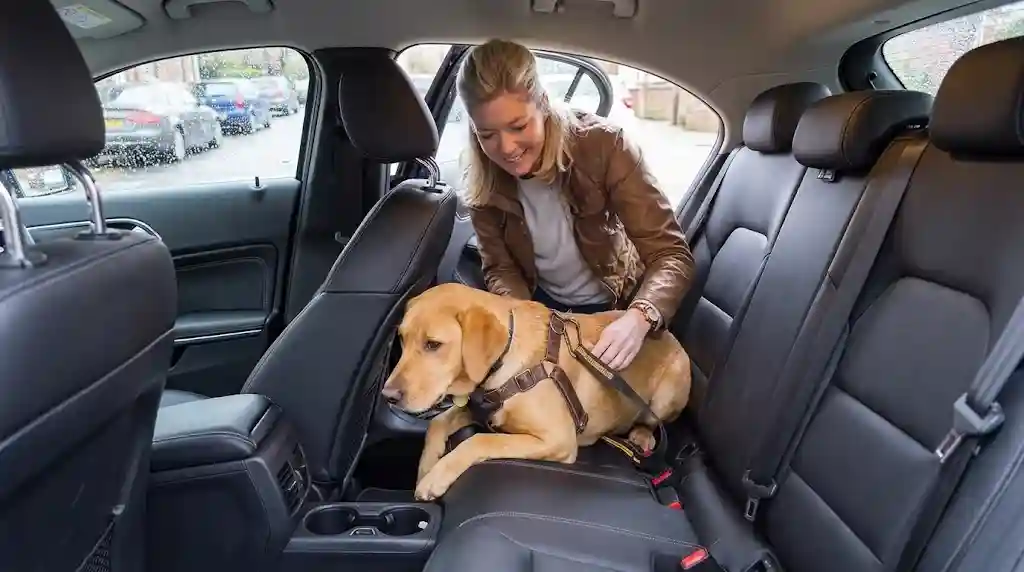
A dog car harness is a vest-like garment designed to fit around a dog’s chest and torso, distributing force evenly across their body rather than concentrating it on the neck. Unlike standard walking harnesses, purpose-built car harnesses feature reinforced webbing, crash-tested clips, and specific attachment points to connect to vehicle restraint systems. They are a critical component of any effective car safety system for dogs, working in conjunction with a seat belt tether or by integrating directly with the car’s seat belt.
Types of Dog Car Harnesses
While many harnesses can be used for car travel, true “car harnesses” are distinct:
- Crash-Tested Harnesses with Built-in Tethers: These harnesses are specifically designed for car safety and often include integrated, reinforced tethers or loops that work directly with the car’s seatbelt. They typically feature padded chest plates for comfort and impact absorption.
- Harnesses Compatible with External Tethers: Many crash-tested car harnesses are designed to be used with a separate seatbelt tether that clips into the vehicle’s buckle or LATCH system.
- Chest Plate Harnesses: These often feature an ergonomic design that contours to the dog’s shape, distributing pressure across a wide area of the chest. They can be comfortable for anxious dogs and are durable for daily use, including car travel with the right attachments. For anxious dogs, this guide on dog grooming tips for anxious dogs can be very helpful.
Advantages of Dog Car Harnesses
The benefits of a well-designed dog car harness are significant:
- Superior Force Distribution: Car harnesses distribute the force of a sudden stop or collision across the dog’s chest and torso, minimizing strain on the neck and reducing the risk of choking or injury.
- Crash Protection: High-quality, crash-tested harnesses are engineered to withstand impact forces and keep the dog restrained, preventing them from becoming a projectile.
- Enhanced Comfort: Many car harnesses are padded and breathable, designed for longer wear during travel, ensuring the dog remains comfortable.
- Reduced Distraction: By keeping the dog securely in place, harnesses contribute significantly to reducing driver distraction.
- Versatility: Some car harnesses can double as walking harnesses, offering convenience for pet owners.
Disadvantages of Dog Car Harnesses
Potential drawbacks associated with dog car harnesses include:
- Fit is Crucial: A poorly fitting harness, whether too loose or too tight, can be ineffective in a crash, cause discomfort, restrict breathing, or chafe the dog.
- Not All Harnesses are Created Equal: Standard walking harnesses are not designed for car safety and can fail under collision forces, with buckles snapping or stitching tearing. Owners must seek out crash-tested and certified products.
- Potential for Restriction: Some dogs may find harnesses restrictive, especially if they are not accustomed to wearing them.
- Cost: High-quality, crash-tested car harnesses can be more expensive than basic tethers.
| Feature | Dog Seat Belt (Tether) | Dog Car Harness |
|---|---|---|
| Primary Function | Limits movement, prevents distraction and ejection. | Distributes impact force, restrains the dog. |
| Mechanism | Strap/tether connecting dog’s harness to car (buckle, LATCH, headrest). | Vest-like garment worn by dog, designed with attachment points for vehicle. |
| Crash Protection | Limited on its own, mainly prevents dog from becoming a projectile. Effectiveness depends heavily on tether length and harness quality. | Designed to absorb and distribute impact force across the dog’s chest and torso, offering greater protection when crash-tested and certified. |
| Attachment Point (Dog) | Must always attach to a proper dog harness, never a collar. | Fits around the chest and body; connects to the car via its own loops or a tether. |
| Key Advantage | Simple to use, prevents distraction, keeps dog contained. | Superior injury prevention by distributing crash forces, comfortable for longer rides. |
| Key Disadvantage | Offers less crash protection without a high-quality harness; risk of injury if attached to a collar. | “Crash-tested” claims vary; proper fit is essential for effectiveness; can be more expensive. |
| Ideal Scenario | Used in conjunction with a crash-tested car harness. | Primary restraint system, especially when crash-tested and well-fitted. |
Safety Standards and Crash Testing: What You Need to Know
The term “crash-tested” is widely used in pet product marketing, but it’s critical for consumers to understand its implications. Unlike child safety seats, there are no official government or industry standards for pet vehicle restraints in the U.S. This means any company can claim their product is “crash-tested” based on their own internal methodologies, which may not be rigorous or transparent. The most reliable benchmark for pet safety products comes from the Center for Pet Safety (CPS), a non-profit organization dedicated to independent research and advocacy in companion animal safety.
CPS conducts its own crash tests using specially designed, weighted crash-test dummy dogs, simulating head-on impacts at 30 mph, modeled on Federal Motor Vehicle Safety Standard 213 (FMVSS 213) for child safety seats. Their testing assesses whether the restraint keeps the dog on the seat, if hardware breaks, and if the tether allows dangerous forward travel (excursion). A significant 2013 CPS study revealed that a large majority of harnesses on the market at the time failed to adequately protect pets in simulated crashes, with only a few brands performing well. Therefore, when evaluating a product, look for “CPS-certified” rather than just “crash-tested” to ensure it has passed a recognized third-party evaluation. Products with CPS certification, like certain Sleepypod Clickit models, have demonstrated a higher level of performance in keeping dogs restrained and reducing injury risk.
For more detailed information on specific crash test results and safety protocols, pet owners can refer to the official reports and guidelines published by organizations like the American Kennel Club (AKC), which offers valuable resources on pet safety. This independent validation is crucial for making informed decisions about your pet’s safety gear.
Choosing the Right Option for Your Dog and Vehicle
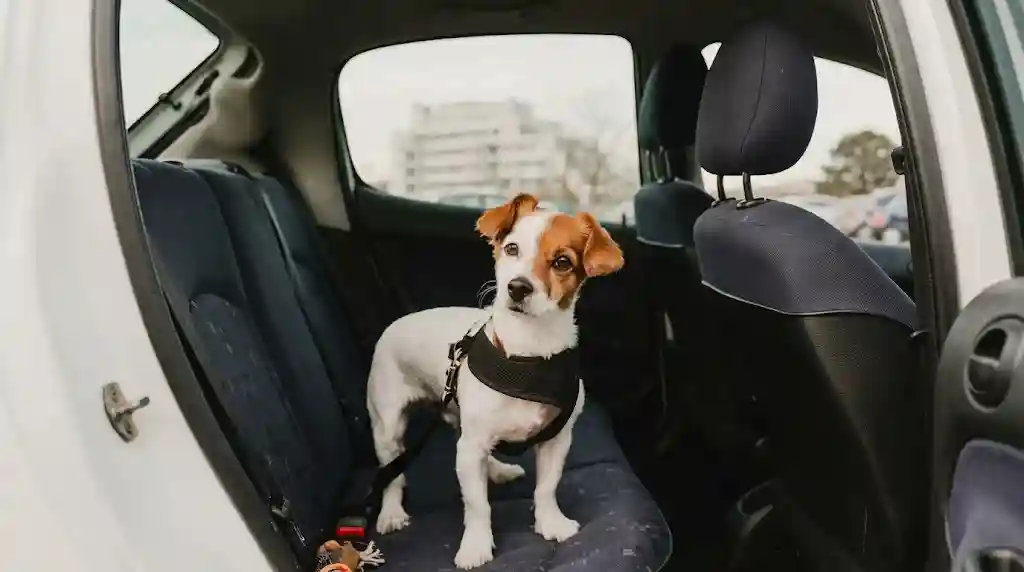
Selecting between a dog seat belt tether and a car harness, or more accurately, choosing the right combination, depends on several factors specific to your dog and your vehicle. The goal is always to achieve maximum safety, comfort, and compliance with any applicable laws.
Factors to Consider
- Dog’s Size and Weight: Harnesses accommodate a wider range of dog sizes than some car seats, but a properly fitted car restraint harness is critical for all sizes. Some tethers are designed for specific weight ranges. For very large breeds, secure travel crates might be recommended by experts.
- Dog’s Temperament and Behavior: Anxious dogs or those prone to excessive movement might benefit from the more contained feeling of a well-fitted harness combined with a shorter tether. Dogs that tend to chew might require more durable tether materials. If your dog is prone to excessive barking during travel, this guide on how to stop excessive dog barking may be useful.
- Vehicle Type and Compatibility: Consider your car’s design. Sedans often work well with backseat harnesses, while SUVs/hatchbacks might allow for crates in the cargo area (secured). Check if your car has LATCH systems, as they provide secure attachment points for certain harness systems. Ensure the seatbelt buckle on your tether is compatible with your car’s buckles.
- Frequency and Length of Travel: For short errands, a basic tether with a good harness might suffice for distraction prevention. For regular long drives, a crash-tested harness offering genuine protection is a better investment.
- Crash Test Certification: Prioritize products that are certified by independent organizations like the Center for Pet Safety. This offers the highest assurance of proven safety performance.
- Comfort and Fit: The harness should fit snugly but comfortably, allowing two fingers to slip underneath the straps. It should not restrict breathing or chafe.
Installation and Proper Use
Even the best equipment is ineffective if not used correctly.
- Harness First: Always fit the car harness to your dog according to the manufacturer’s size chart and ensure it’s snug before every trip.
- Back Seat Only: Dogs should always ride in the back seat. Front airbags can cause severe injuries or even death to pets in a collision.
- Secure Attachment: Fix the tether to the car’s designated anchor point (seatbelt receiver, headrest loop, or LATCH anchors).
- Connect to Harness, Never Collar: Clip the other end of the tether to the designated ring on the harness, never to a neck collar.
- Adjust Tether Length: The tether should be set short enough to prevent the dog from reaching the front seats or building significant momentum before the strap goes taut, but still allow them to comfortably sit, lie down, or shift positions.
- Regular Checks: Before each drive, quickly check the fit of the harness and the security of the tether.
Beyond Belts and Harnesses: Comprehensive Car Safety for Pets
While dog seat belts and car harnesses are vital, they are part of a larger picture of pet car safety. For ultimate protection, especially for frequent travelers or larger dogs, properly secured travel crates can offer superior safety. Crates provide an enclosed space that protects pets from flying objects and the “projectile effect” in a hard impact. They should be crash-tested and secured so they won’t slide or shift during stops or collisions.
Other essential safety tips include:
- Never Leave Pets Unattended: Temperatures inside a car can rise rapidly, even on mild days, leading to heatstroke or death. In cold weather, pets can freeze.
- Hydration and Breaks: On long trips, make frequent stops (every 2-3 hours) to allow dogs to stretch their legs, go to the bathroom, and hydrate. Always have fresh water and a portable bowl available. For a complete nutrition overview, see this ultimate pet nutrition guide.
- Proper Ventilation: Ensure the vehicle is well-ventilated and at a comfortable temperature.
- Avoid Open Windows: While tempting, allowing dogs to ride with their heads out the window can lead to injuries from debris or potential falls.
- Gradual Introduction: For puppies or anxious dogs, gradually introduce them to car rides, starting with short trips and increasing duration over time to build positive associations. For puppies, this guide on how to potty train a puppy fast can help with travel routines. And for general training, this guide on easy commands every puppy should learn is very useful.
If your dog has skin issues or allergies that might be aggravated by car travel, this guide on dog allergies may be helpful. For dogs with sensitive stomachs, this guide to the best dry dog food for sensitive stomachs can help. And for puppies, this guide to the best puppy food for large breed puppies is a valuable resource.
Conclusion: Prioritizing Your Pet’s Well-being
Ultimately, the choice between a dog seat belt tether and a car harness is not an “either/or” but often a “both.” An effective dog car safety system typically involves a high-quality, crash-tested car harness combined with a compatible seat belt tether. The harness distributes impact forces, while the tether secures the dog to the vehicle, preventing distraction and forward momentum. While laws regarding pet restraints vary by state, the safety case for securing your dog is undeniable. Unrestrained pets pose a significant risk to themselves and all occupants of the vehicle. By investing in certified safety gear, ensuring proper fit and installation, and following comprehensive pet travel safety guidelines, you can ensure your furry friend enjoys every journey safely and comfortably. Prioritizing your pet’s well-being on the road is a fundamental responsibility of every loving dog owner. For a complete grooming routine to keep your dog clean and comfortable after travel, see this dog grooming checklist for first-time owners. For dogs with double coats, this guide on how to groom a double-coated dog at home is also helpful. And for drying techniques after a bath, this guide on the best drying technique for long-haired dogs is very useful.